What Is Anomaly Detection?
Anomaly Detection lets you detect changes in the behaviour of assets across your system much earlier than simple alarm setpoints allow.
By being aware of the context of your assets – by understanding not just the value by itself, but how it fits in with the rest of the wider system – you can make alerts that are significantly more aware of the process and how your values move, helping to spot issues well before you’d break alarm limits.
How They Work
For normal alarms, you create limits that represent the worst case scenario.
If you have a motor sitting outdoors, your temperature limits have to go between when the motor is off in the middle of winter to when the motor is running at 100% during the hottest summer.
Which means if you have a failure in the cold, you might miss the warning signs. If you have a heat-wave, you might trip a machine for no good reason. And you only ever get an alert about the motor if something truly catastrophic has happened – when it’s usually already too late to avoid downtime.
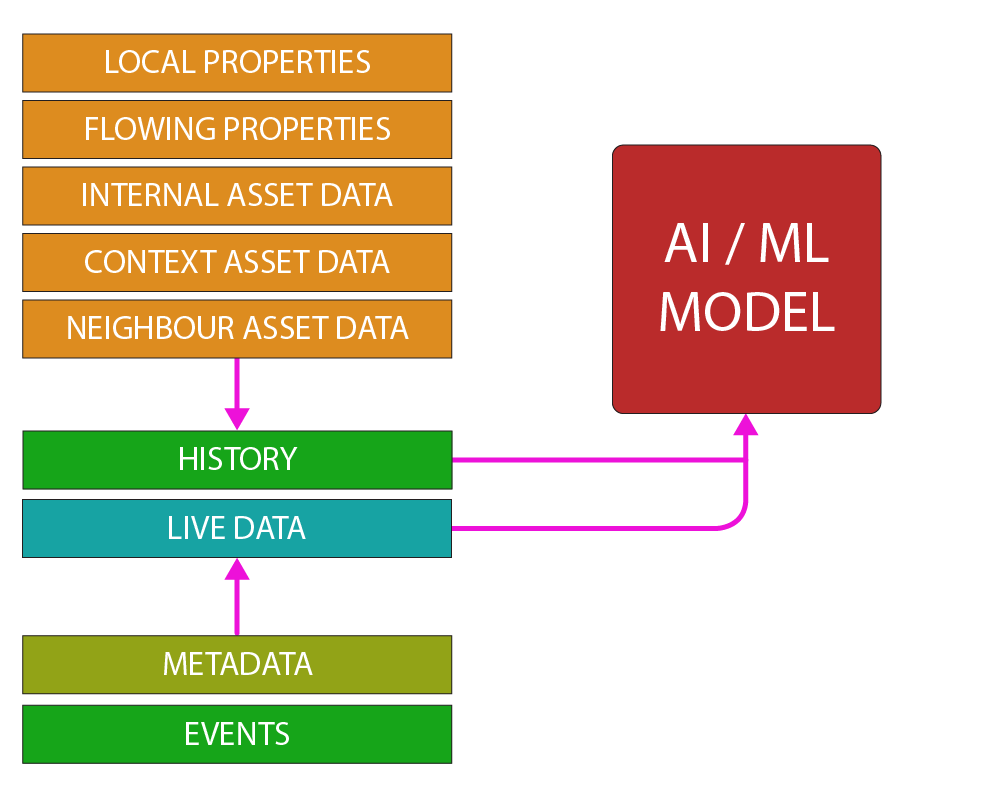
Anomaly Detection is different. As well as looking at the motor, it looks at the system(s) around it. Instead of just temperature, it will take into account other variables, like…
- Vibration,
- Ambient Temp / Humidity,
- Voltage,
- Speed/Current
- Current Product Type
The anomaly detector then determines if the motor is abnormal – not if the temperature is simply over 90 degrees, but if the temperature is high for this product at this speed in these specific environmental conditions.
This results in a much tighter tolerance and early warnings when machines start behaving unpredictably or out-of-spec.
This in turn means that you have fewer breakdowns, fewer defects and increased production.