AI Powered By ARDI
How ARDI helps power your Machine Learning systems
ARDI is designed to deliver consolidated information.
Even if your data is scattered over multiple different systems, ARDI can bring it together and deliver it.
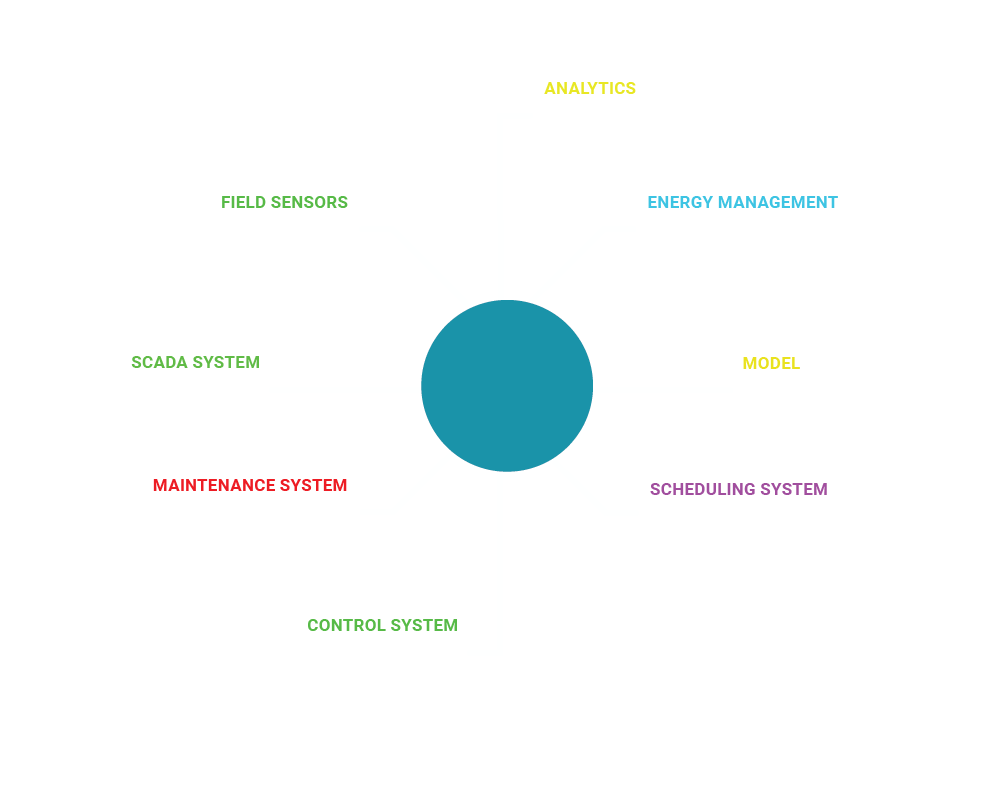
And it’s not just your sensor history, but any other system you’d care to connect to. Such as…
Each source of information adds new possibilities for not only improving the accuracy of your AI by taking more factors into account, but also in answering a wider range of questions.
The access is easy, REST-based, and is organised in a human readable way.
This means you don’t need to know where the data comes from, you don’t need login details or need to know how to speak a range of protocols. When it comes time to build an AI that needs information from one historian, two databases and an Excel file – you make one call to ARDI and it delivers the data you need.
It means that you can use the current shift, manually-measured quality, machine condition or customer code in an AI just as easily as you can use a simple temperature or a current.
All of your history and all of your current values are simply there.
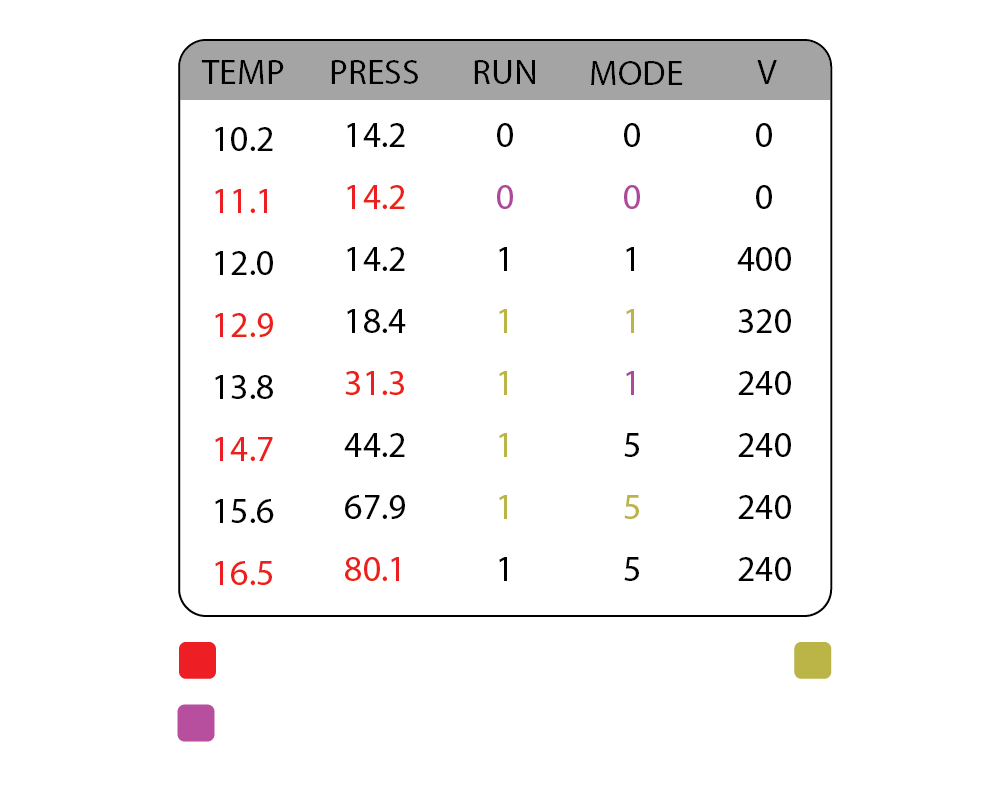
AI doesn’t deal with missing data very well. Every input being fed into all but the most exotic AIs needs to have a valid value.
ARDIs API cleans the data as it goes through. So as well as gathering the information from different systems, fixing the odd scaling issue and dealing with the different timezones and date formats, it also makes sure your data is complete – no empty spaces unless your system was really reading bad/null data.
Even with only a single historian source, you’ll often have mixed sampling rates. High-speed information being sampled 4 times a second, medium-speed data updating every second, slow data updating every 10 seconds and manual entries being updated once a week.
When you request a table of data with ARDI or use our Python API, it goes through and ensures that every timestamp has values for every channel of data you requested. And it’s not just simple interpolation – ARDI ensures that discrete values (such as boolean or integer values) are filled rather than interpolated, to ensure all data values are valid. It does this even if you use historians that don’t natively support integers.
ARDI drivers also help to ensure consistent behaviour between data sources, such as ensuring discrete values have sharp rising and falling edges, so they aren’t accidentally interpolated elsewhere.
ARDI understands your sites structure.
Not just in how your assets are organised and grouped into types, but your relationships describe how each asset is connected, and helps flow data between them.
Our API includes the AIPOINTS function, which returns a list of each property an asset has that might be useful in creating an machine learning model
For example, using the AIPOINTS function on a pump can include…
You’re not forced to use any of them – but it can make a great start to creating new AI.
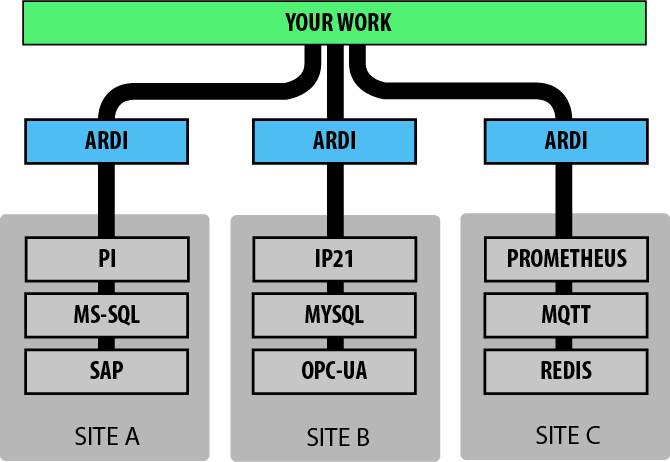
ARDI works as a site abstraction layer.
This means that sites that are radically different behind-the-scenes – different hardware vendors, different historians, databases and IT infrastructure – can still appear the same when viewed in ARDI.
This means that solutions you build on top of ARDI can move between those sites seamlessly. An AI that was built and trained on site A can be moved to Site B and used straight away, or re-trained if required without any extra effort.
Using ARDI, a solution that works on one site can be rolled out across an entire organisation, if the right data is available.
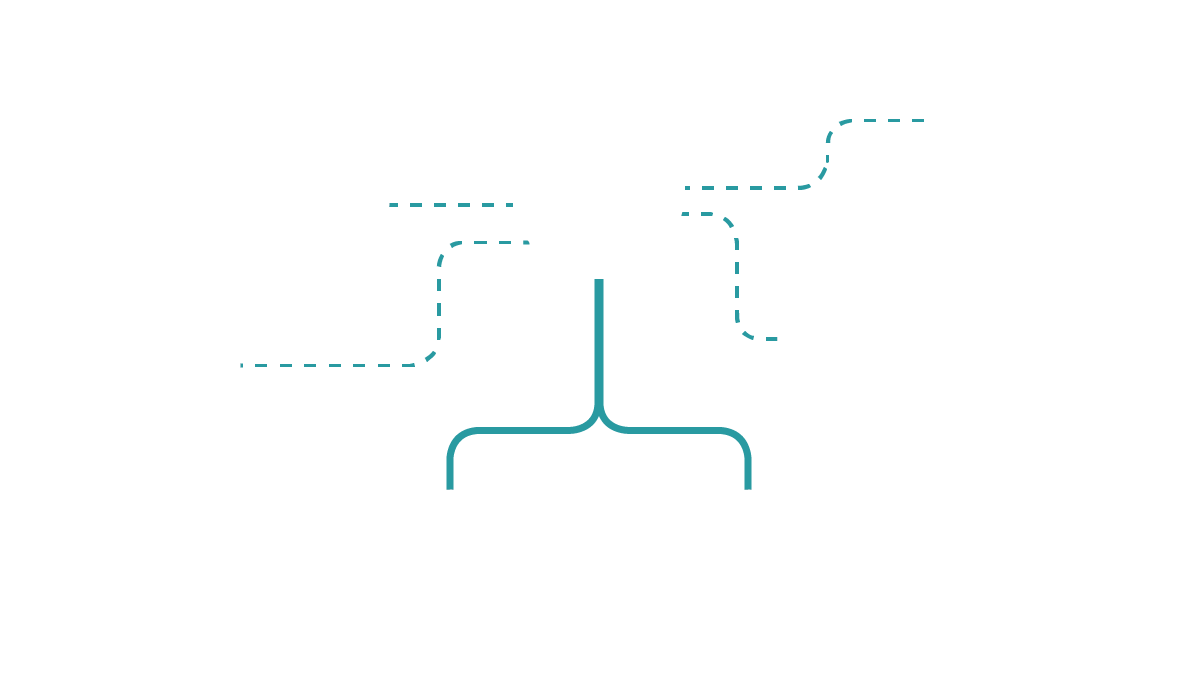
We also include range, mapping and colouring information when you request data from ARDI – this gives you the information you need to normalise your AI inputs.
ARDI also offers tools for creating, deploying and utilising the AIs you’ve created.
Our Cognition addon is a quick, visual method of building a machine learning model for estimation, state classification, condition monitoring and spotting unusual behaviour.
The Agency system takes care of connecting AIs to ARDIs assets. These aren’t always just connecting a single AI to a single asset – you can build an AI and attach it to every asset of a given type or every asset with a the properties needed. They’ll then be fed live data, and you can use the results in our modular output system – which pushes the information into databases, to OPC-UA, sends alerts or returns the data back to ARDI for reporting, distribution and further analysis.
ModelHost is used to connect machine-learning models to live data, and to perform techniques such as goal seeking to be able to use machine learning models in new ways.
ARDIs subscription-based live data system means that AIs that need live data only need to run when your data changes. This keeps network traffic and CPU usage as low as possible.

ARDI doesn’t lock you in to any specific technology.
Although we provide a range of pre-built libraries and helper frameworks in Python, you’re not limited to them. ARDI communicates using simple web-based calls and speaks in a number of standard formats (such as XML and JSON), so almost any vaguely-modern language or tool can be used with ARDI data.
If you do decide to use the tools we provide, our modular output system helps to record and distribute AI results and efficiently run them using live data.
ARDI is designed to remove the barriers between your tools and your information – which means you’re able to design, train and deploy machine-learning systems quickly and effectively across both assets and sites.
The best way to understand the power of ARDI is to see it with your own eyes.
Simply add your contact details below and we will arrange a personal demo where we will take you on a full tour of ARDI’s backend and show live demonstrations of each capability